Scott Stevenson is a Brisbane music producer who runs Shsoo Records, selling exclusive cover art online through Stripe. Sales data, website traffic, and transaction history were all accumulating. But Scott is a producer, not an analyst, and he had no way to read what it was telling him.
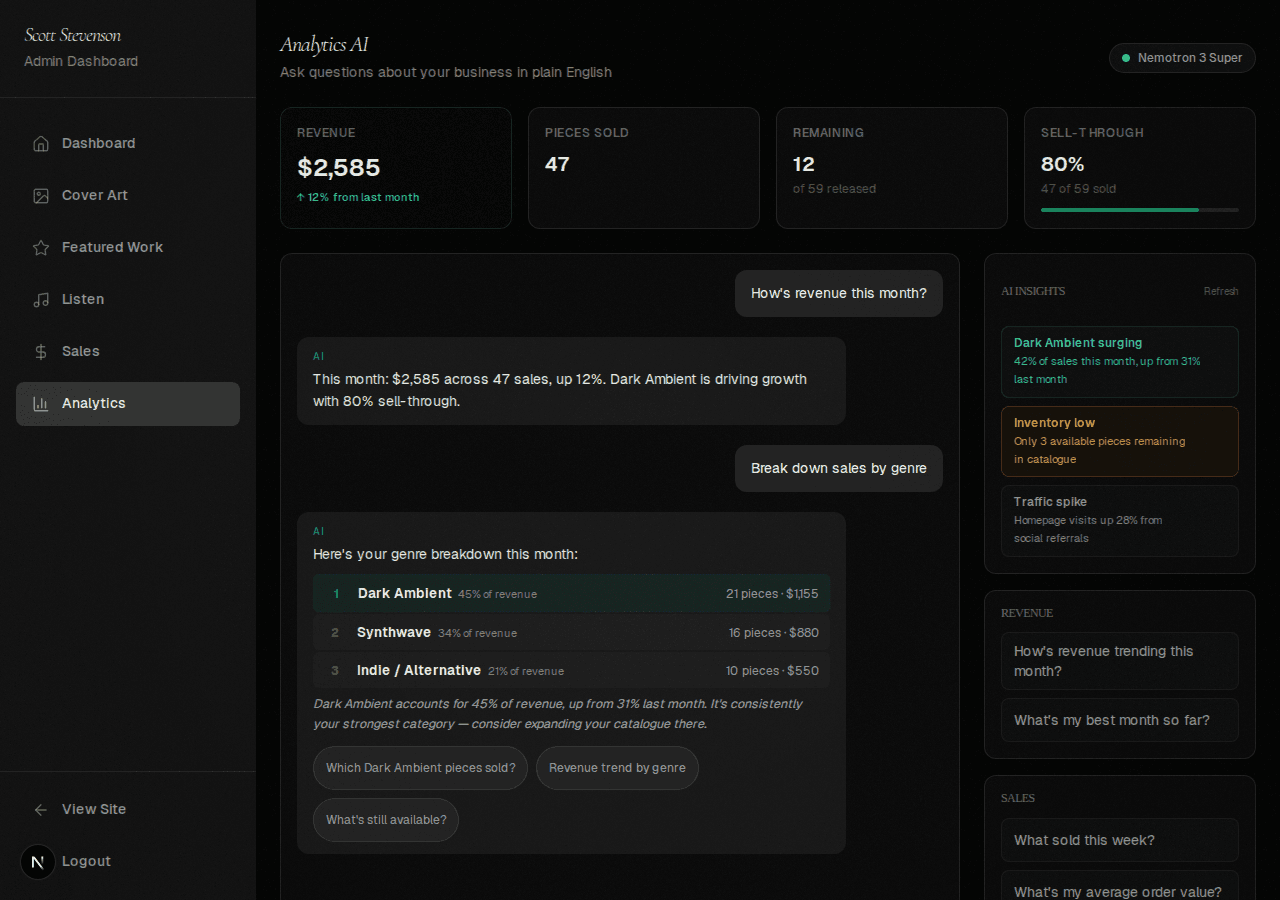
Now he opens his admin console, asks “How's revenue this month?” or “Which genres sell best?”, and gets an answer in seconds, with specific numbers from his own sales.
Data accumulating, answers not
Shsoo Records had sales, catalogue, and website data accumulating, but no analysis layer between the data and the decisions.
Decision pressure
Pricing, genre focus, and inventory calls depended on what was actually selling.
Data spread
Stripe transactions, catalogue metadata, website analytics, and performance signals lived in separate views.
Operator fit
Scott needed plain-English answers without learning SQL or hiring a reporting function.
Before
After
Answer speed
Manual analysis or no answer
An answer in seconds
Sales mix
No clear view of what sells
Genre, piece, and revenue breakdowns on demand
Next action
Static reports stop at the numbers
Follow-up questions suggested after every answer
Data boundary
Business data spread across tools
Private answers from the source data
What we built for Scott
An analytics system Scott queries in plain English. For each question it picks the right tool, runs it against his live business data, and answers in plain language with a useful follow-up to ask next.
Tool-use AI
Questions route to audited tools for revenue trends, recent sales, genre breakdowns, inventory status, and Core Web Vitals.
Live console
Scott sees the key operating numbers first, then asks follow-up questions in plain English.
Growing context
Stripe, catalogue, traffic, and performance data deepen the answer set over time.
Technical approach
A constrained tool layer answers business questions without giving the model direct database authority.
Predefined tools use parameterised queries instead of raw text-to-SQL generation.
Access and processing are scoped to the authorised business workflow.
Results
Question to answer
In seconds
Ranked answers from his Stripe and catalogue data.
Sales mix
Genre and piece breakdowns show what actually sells.
Next question
Each answer suggests the useful follow-up instead of ending the analysis.
Decision quality
Pricing and inventory calls move from gut feel to operating data.
Where this fits
Transaction data
The business already has Stripe, sales, catalogue, or operating data to query.
Decision pressure
Pricing, inventory, category focus, or timing changes when the answer is visible.
No analyst layer
Operators need plain-English answers without SQL, dashboards, or another hire.